They Look the Same. They Are Not.
If you have ever stood in a tile showroom feeling confused about the difference between ceramic and porcelain, you are not alone. They sit next to each other on the display walls. They look similar. They are both made from clay. And the sales staff sometimes uses the terms interchangeably.
But the differences between them are real, and they matter a lot for how your renovation performs ten years from now.
The Core Difference Is Density
Both materials start as clay, minerals, and water. The difference is in how they are made.
Ceramic tiles are fired at lower temperatures — around 1000 to 1100 degrees. Porcelain tiles are fired significantly hotter, between 1200 and 1400 degrees, using finer, denser clay. That extra heat transforms the material at a molecular level, making porcelain dramatically harder and less porous.
Water Is Where It Gets Real
The most important practical difference is water absorption. Ceramic absorbs between 3 and 7 percent of its weight in water. Porcelain absorbs less than half a percent.
In a dry living room, that difference does not matter much. In a bathroom, a kitchen, or anywhere near water, it matters enormously. And for any outdoor application in Montreal — where our freeze-thaw cycles will destroy a water-absorbing tile in a few seasons — it is the difference between a surface that lasts decades and one that cracks in two winters.
When Ceramic Makes Perfect Sense
Ceramic is not a bad material. It is a different material with different strengths. If you are working with a tighter budget and the space is an indoor, low-moisture environment — a backsplash, a decorative accent wall, a powder room — ceramic gives you a wide variety of beautiful colours and designs at a very accessible price point.
Material costs run from about $2 to $8 per square foot, which makes it the most budget-friendly tile option available.
When Porcelain Is the Clear Winner
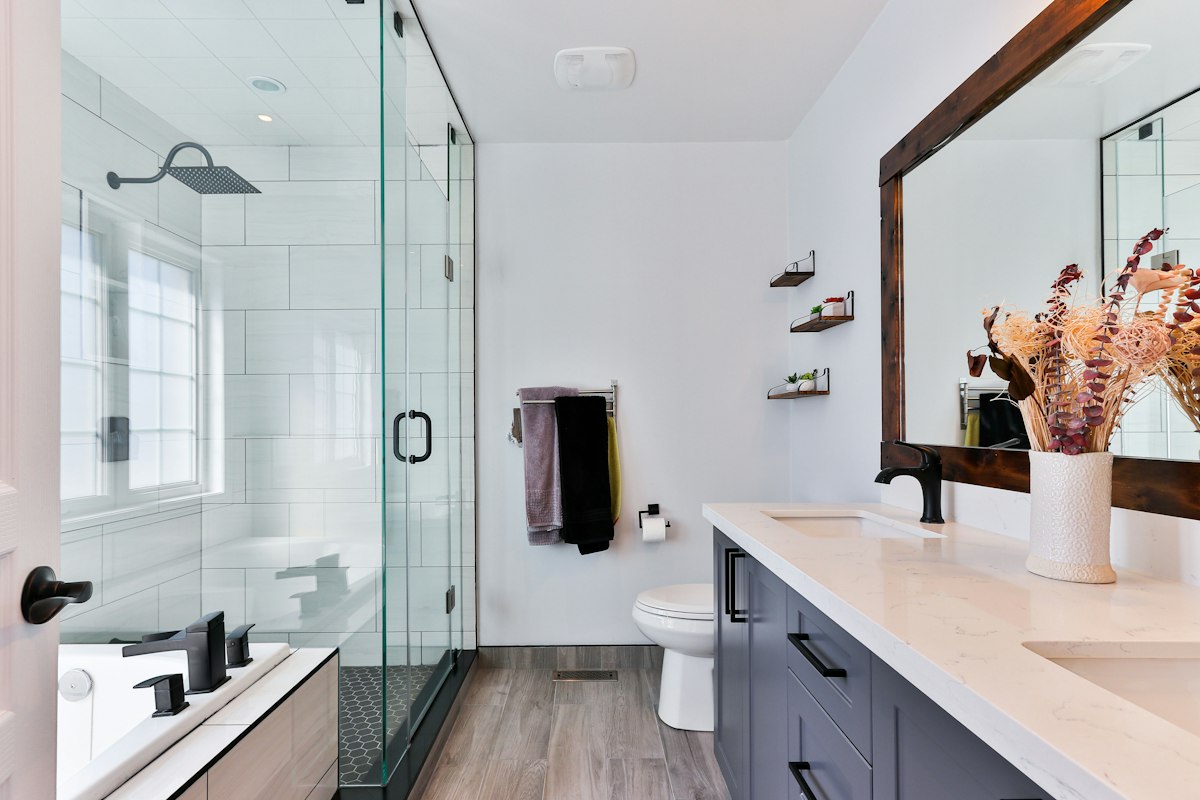
For anything involving high traffic, significant moisture, or outdoor exposure, porcelain is the answer. Kitchen floors, bathroom walls and floors, mudrooms, hallways, outdoor patios and pool decks — these all demand the density and water resistance that only porcelain provides.
And for Montreal specifically, porcelain rated for freeze-thaw resistance is the only tile material you should consider for any exterior application. Our climate simply will not tolerate ceramic outdoors.
The Cost Difference
Yes, porcelain costs more — typically $4 to $15 per square foot for materials, compared to $2 to $8 for ceramic. The premium reflects the more intensive manufacturing process and the superior performance you get in return.
For most Montreal renovations, the porcelain premium is worth every dollar — particularly in kitchens and bathrooms where you want the surface to last the life of the renovation.
The Simple Decision Framework
If the area is dry, indoor, and low-traffic, ceramic is a smart budget choice. If the area is wet, high-traffic, or outdoors in Montreal, choose porcelain without hesitation.